
Systematic Literature Reviews with Elicit: A 6-Step Process

Published:

A systematic literature review is the type of research with the most rigorous process: a clear question, a transparent search strategy, predefined paper selection criteria and data extracted using a template. It is also the most labour-intensive. Screening several thousand titles and abstracts, then reading several hundred full-text papers, often takes months. Elicit has offered a dedicated workflow for this since late 2025. It does not replace the researcher, but it reduces repetitive work.
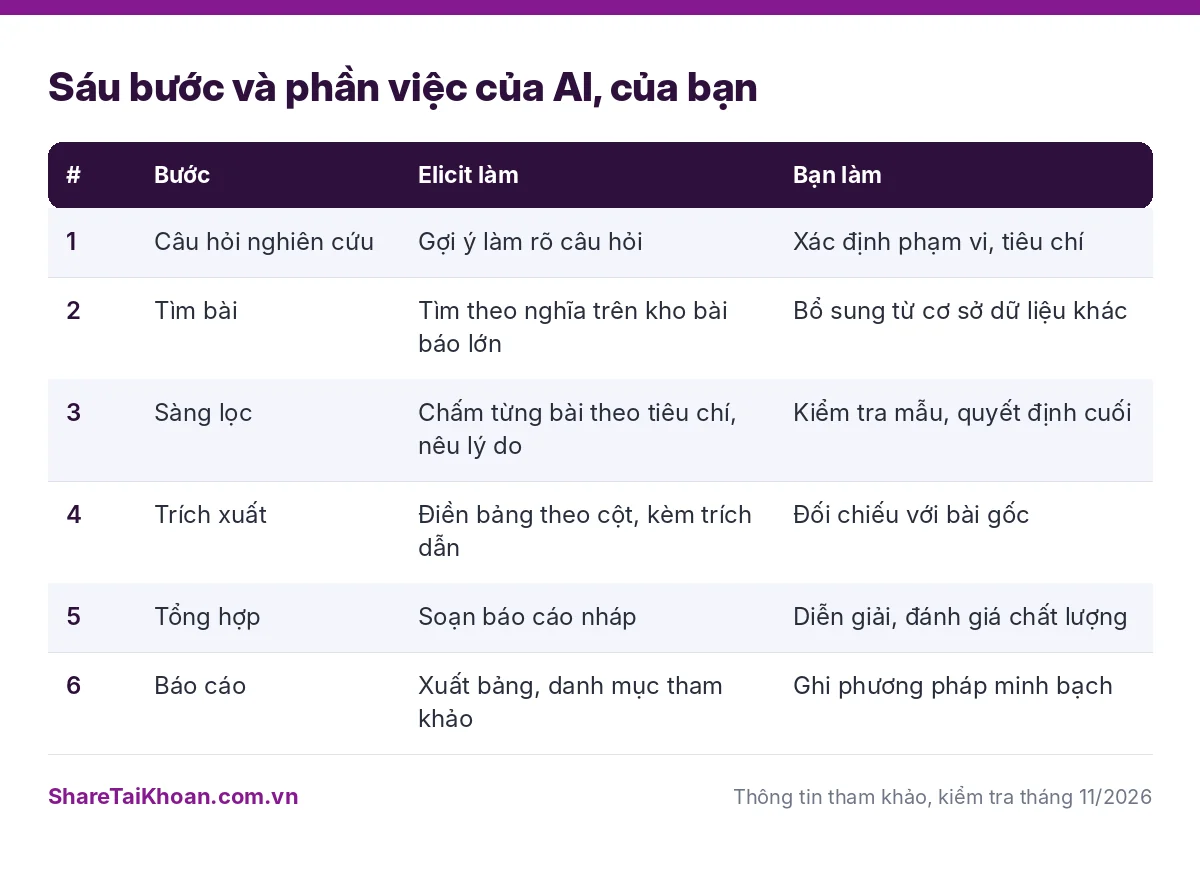
Conducting a systematic literature review with Elicit: 6 steps from research question to data extraction table
A systematic literature review is the type of research with the most rigorous process: a clear question, a transparent search strategy, predefined paper selection criteria and data extracted using a template. It is also the most labour-intensive. Screening several thousand titles and abstracts, then reading several hundred full-text papers, often takes months. Elicit has offered a dedicated workflow for this since late 2025. It does not replace the researcher, but it reduces repetitive work.
If you are new to Elicit, first read the article What is Elicit AI.
Step 1. Write your question and criteria before opening the tool
The quality of the entire process depends on this step.
A structured question. Biomedical research often uses a framework covering population, intervention, comparison and outcomes. Other disciplines have similar frameworks.
Inclusion and exclusion criteria: study type, population, publication year, language, measured outcomes.
Write a protocol and register it if your discipline requires it.
If the criteria are vague, AI screening will be vague too. "Studies on adults aged 18 and older, with a control group" works; "high-quality studies" does not.
Step 2. Find papers
Elicit searches a database of more than one hundred million academic papers based on the meaning of your question, rather than just matching keywords. You can also upload your own list of papers or PDF files.
Points to remember: one source is not enough for a systematic review. Elicit's database does not cover every journal, especially paywalled and Vietnamese-language journals. Search the standard databases in your field as well, export the results and import them into Elicit for combined screening. Record the search strings and search date for each source. The article Elicit and Google Scholar explains the difference between the two search types.
Step 3. Screen papers
Enter the criteria. Elicit assesses each paper against each criterion, recommends whether to retain or exclude it, and provides reasons with supporting excerpts.
How to use it responsibly:
Check a sample first. Screen 50 to 100 papers yourself and compare your results with the AI's. If there are substantial differences, revise the wording of the criteria and run the screening again.
Review all papers flagged as uncertain.
Prioritise sensitivity. At the title and abstract screening stage, mistakenly retaining a paper is less harmful than mistakenly excluding one.
Maintain the two-reviewer principle if your discipline's guidelines require it. Many teams use AI as a second screener, with a human resolving disagreements.
Step 4. Extract data
Create a table with one column for each item to extract: sample size, study design, intervention, outcome measures, main findings and limitations. Elicit reads the full text when available and fills in each cell, with a supporting quotation.
Write specific column descriptions, including units and how to record missing information.
Click the citation in each important cell and cross-check against the original paper. Data in tables, figures and appendices are particularly prone to errors.
Blank cells or entries marked as not found require you to open the paper and check, because Elicit may only have been able to read the abstract.
Step 5. Synthesize findings
Elicit can draft reports summarizing findings with citations. Use it to see the big picture, not as your final results section. Tasks that remain your responsibility:
Assess each study's risk of bias using a standard tool in your discipline.
Decide whether the data can be pooled, and perform statistical analysis if so.
Explain heterogeneity between studies.
Conclusions and implications.
Step 6. Report transparently
Export the table to CSV and the reference list to a format compatible with reference management software. Some export formats are only available on paid plans.
Draw a flow diagram showing the number of papers at each stage.
State clearly in the methods section which stages you used Elicit at, which version you used and when, and how humans checked the results. Many journals require disclosure of AI use.
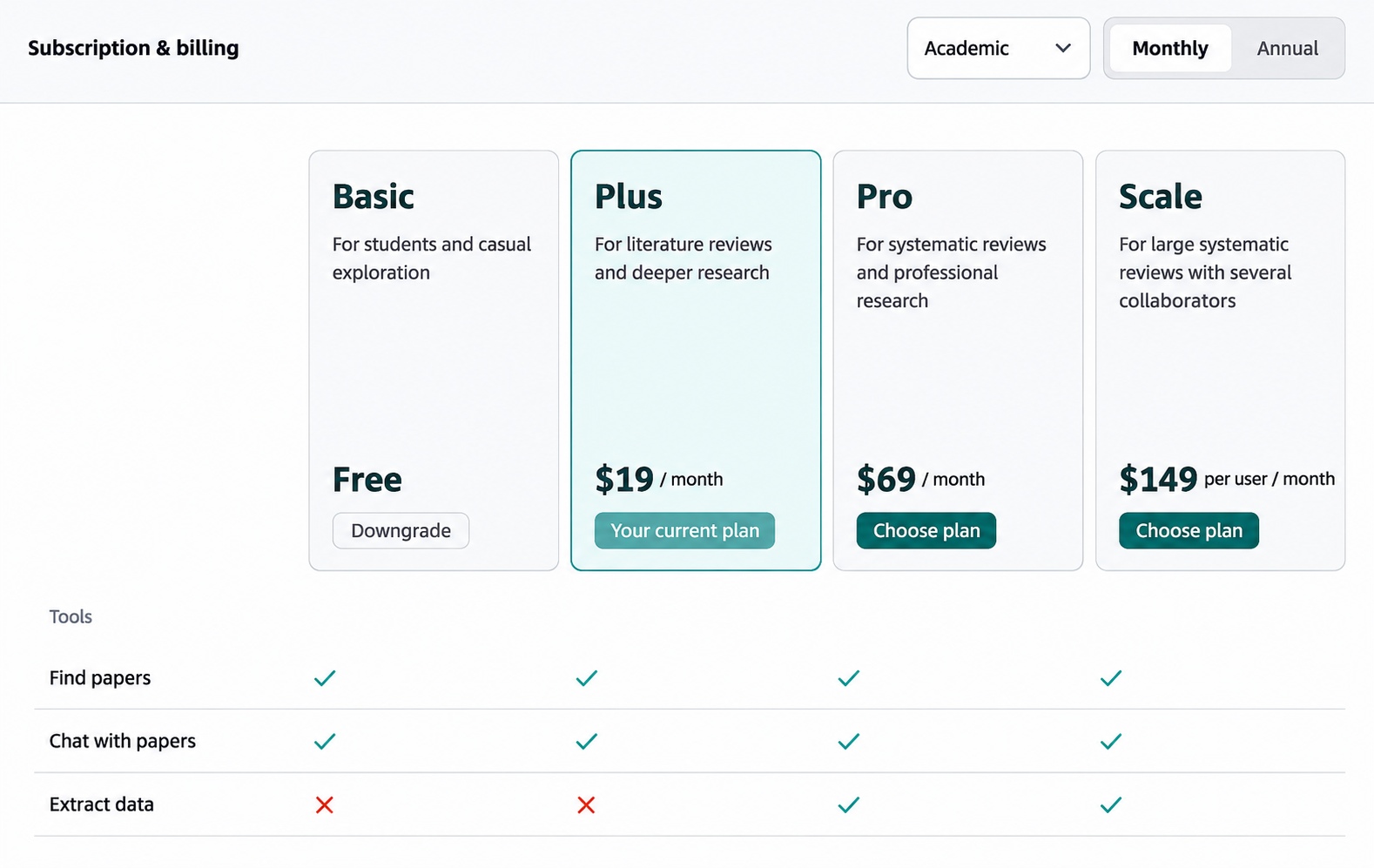
What can each plan do?
Free Basic plan: paper searches, small-scale extraction and a small number of automated reports each month. Enough to learn the workflow.
Plus: a low price, additional export formats and higher limits.
Pro: a complete systematic review workflow, screening up to thousands of papers, with multiple extraction columns at once. The list price is 49 USD per month, billed annually.
Scale, Enterprise: for teams and organisations.
Details on account options are available in the article Elicit Pro: features and account options.
Complementary tools
Check the level of agreement in the evidence for a question: Consensus; see the article Elicit and Consensus.
Follow citation networks to find missed papers: Litmaps.
Understanding individual difficult papers: SciSpace.
Writing and reviewing academic English: Grammarly, see the article QuillBot's Paraphraser.
Frequently asked questions
Is using AI to conduct systematic reviews accepted?
An increasing number of teams use AI to assist with screening and extraction, provided that humans verify the work and disclose its use transparently. Check the guidance from journals and methodological organizations in your field.
Can Elicit find Vietnamese-language papers?
The database primarily contains international papers. You should find Vietnamese-language materials through other sources, then upload the PDFs for extraction.
Does Elicit fabricate citations?
Elicit works with real papers and cites supporting sentences, so the risk is lower than with a typical chatbot. It can still misinterpret information or cite the wrong figures, so verification is necessary.
Where can I buy Elicit?
Xem the Elicit product page and other tools in the Learning category.
References
ShareTaiKhoan is an independent service, not Elicit or a representative of Elicit. Prices, limits and terms are determined by the provider and may change; the information in this article was checked in November/2026.
(0 ratings - 0/5)
Buy affordable accounts at ShareTaiKhoan
Other articles
- Elicit AI vs Google Scholar 2026: Which Tool Should You Choose?
- Elicit AI vs Consensus AI 2026: Which research tool should you choose?
- What Is Elicit AI? A Guide to Finding Research Literature
- Canva Pro or Photoshop? A Comparison for Marketing in 2026
- Runway Act-Two: Animate AI Characters Using Your Video
- Semrush One and AI Visibility: Measuring Brand Presence in ChatGPT
- Create Natural Vietnamese AI Voiceovers with Vbee: 7 Techniques
Comments (0)
Sign in or register to comment.
No comments yet.